|
...
and the Memphis LegitimateTheatres |
|
|
|
From the
earliest days of silent movies, Memphis was considered a "movie town".
As the city grew, plush movie palaces opened downtown
and every neighborhood seemed to have its own theater. In the 40s
and 50s, it was not unusual for Hollywood to "try out" a movie here, in spite
of the city's notorious movie censor, Lloyd T. Binford. As Memphis
began to spread out, multiplexes began to open in every shopping mall.
This, along with the increasing popularity of television, marked the
decline of the downtown and neighborhood theaters. Most of these
original movie theaters eventually closed and regrettably, were demolished.
Today, all of the major theaters in downtown have been demolished except
the Malco - whose name has been changed back to the Orpheum.
|
This page was
originally begun as a tribute to the movie theaters in Memphis that I
loved as a youth in the 1940's and 50's. The theaters are all gone
now and I wanted a record of them. I quickly learned that
other folks are very passionate about their movie theaters also and this page
has grown... and grown, and is still growing. Although the emphasis is on Movie Theaters, the page now includes all theaters back to the Nickelodeons and beyond. I make no claim about the
accuracy of any information below, but I am verifying as much as possible
even though there seems to be no written history. I have not
included Drive-ins and Multiplexes, because my family had no car and there
were no Multiplexes during my youth.
If anyone has more information, photos, or corrections, please contact me so this page can be updated.
Spread-sheets of Memphis Theatres from 1859 to 1975 are
available for FREE download at the bottom of this page.
Gene Gill
|
 |
|
1953 Ads - 824 KB |
|
|
Thanks to the Memphis Public Library and the University
of Memphis Library for many of the photos on this page |
|
|
|
|
|
|
This page contains
many photos. Please wait a couple of minutes for them to
load before clicking. |
| |
|
| AIRWAY
. 2366 Lamar
- Opened: 1942 ... 1100 seats . Closed: 1980s .
Demolished. |
| |
|
|
The Airway
was one of the larger "neighborhood" theaters. It had a spacious
auditorium with a balcony. In size it would compare favorably to the
Rosemary but with less ornate decoration. In the 60s it was already a porn
house, showing mostly Euro-trash. The balcony was "reserved for couples
only." The Airway was still in operation during the early
1980's. It has since been demolished.
"Kemmons Wilson, who later founded Holiday Inn’s got his start
selling popcorn from a rented popcorn machine in the lobby of The Airways".
- Vincent Astor |
| |
|
| |
|
 |
 |
| |
|
Airway |
1953
Airway ad |
|
| |
|
| |
|
|
|
|
|
|
|
| |
|
|
|
| |
|
|
|
BIJOU
-
AUDITORIUM
|
Main - SE corner of Linden
Bijou Opened 1903
. Closed 1911? . Auditorium opened 1894 - closed
1903 |
| |
|
|
|
 |
 |
 |
 |
 |
| |
1901
Auditorium Program for the Memphis Music Festival
|
1905
Bijou Ad |
|
| |
|
|
The Auditorium was
probably the first Cinema in Memphis, and where, in 1897, the new
Cinematograph was first demonstrated in the city. Edison's
Concert Phonograph also had its Memphis debut at The Auditorium.
The Auditorium opened in 1894 and lasted until 1903. The building at S. Main
and Linden, was originally a huge barn used as a garage for horse-drawn
carriages. When electric trolleys replaced the carriages, the
building was converted to a theatre. The Auditorium became the Bijou
in 1903 and the building burned down in 1911. Sometime after 1918
it was supposed to have been rebuilt - closing in 1940. We can find
no record of that in the Directories.
|
|
|
Note from
webmaster: The AUDITORIUM is listed in the Memphis Directories from
1894-1900 at 472-482 S. Main. In 1901-1903, it's listed at Main-SE
corner of Linden. The BIJOU is listed from 1904-1911 at
268-270 S. Main. There is no Bijou listing from 1912 up to 1918.
The Bijou is listed again for one year in 1922 at 146 S. Main.
This is a "2nd Bijou". There are no Bijou
listings after 1922. |
|
|
|
|
|
|
|
 |
 |
|
 |
 |
| Bijou decorated
for 1909 UCV |
1909 UCV Program |
|
The 2nd Bijou |
2nd Bijou -
c1920 |
|
|
| |
|
|
|
 |
 |
 |
 |
|
Auditorium-Billboard 1898 |
Auditorium NY Mirror 1903 |
Bijou - Billboard 1907 |
Bijou Fire - NY 1911 |
|
| |
|
|
|
| |
|
|
|
|
|
| |
| |
| |
|
|
| |
|
|
|
BRISTOL
.
3415
Summer Avenue - Opened: 1930 ... 600 seats .
Closed 1970s . |
| |
|
|
|
 |
 |
|
|
"Here
are two new photos of the actual Bristol. The address on the
center storefront matches and that was the location of the box
office. Visible are the places in the brickwork which
supported the pie-shaped marquee. The center storefront has a
seam in the walls where the front doors to the Bristol were". -Vincent Astor |
| |
|
|
|
The Bristol was a smaller
neighborhood theater just West of Highland Street. According to Memphis
old-timers, it got its name from the time when the area was way out in the
suburbs and that section of Summer Avenue was called the "Bristol
Highway." Bristol was considered "...clear at the other end of Tennessee,
about as far away from Memphis as you can get and still be in the state".
In the mid-to-late 1970s it was being run by a Memphis movie buff named
Mitchell Shapperkotter, probably more for a hobby than as a true
commercial endeavor. It was demolished shortly after
that. The theater had a very long, narrow lobby running clear
through the office block to the auditorium on the back side.
The theatre was a rather standard design with the usual Art
Deco appointments.
The Bristol opened in 1930.
It is listed in the 1930 Memphis Directories and then continuously from
1930 through 1958 (That's as far as we've been able to verify). |
| |
|
|
| |
|
|
|
|
| |
| |
| |
|
|
| |
|
|
|
CAPITOL
926 E.
McLemore Av. Opened 1931 . 595 seats .
Closed 1960s . Demolished 1989 |
| |
|
|
|
|
| |
|
|
|
This
theater is best-known as the home of the legendary Stax Records studios
after its demise as a theater. Though the original building was demolished
about 1989, a new building, Soulsville U.S.A., home of the Stax Museum of
American Soul Music, has incorporated a replica of its
exterior into its design. The first listing of the
Capitol in the Memphis Directories is 1931 and it is listed
continuously from that date up to 1958 (as far as we've been
able to verify).
"During the last half of the 30's my brothers and I would walk from
my dad's small grocery store on Mississippi Blvd to the Capitol
Theater on McLemore (now STAX) where we would see a double feature movie, with an
episode of a serial (Flash Gordon, etc), and enjoy a 5 cent box of
popcorn. They did not sell soft drinks in the movies then, so we did not
step into sticky places on the floor. They did sell 5 cent candy bars,
however."
-- Donald Canestrari, Memphis |
| |
|
|
| |
|
|
|
|
| |
| |
| |
|
|
| |
|
|
|
CHURCH AUDITORIUM
. 391 Beale . Listed in the 1904 - 1911
directories. |
| |
|
|
|
Robert Church, one of the nation's first black millionaires,
built the Church Auditorium and Park in 1899 at the corner of
Beale and 4th. It was one of the grandest facilities in
the city and attracted major talent to Memphis. The
auditorium was demolished in 1921 and a new one was built,
which lasted to the 1970s. |
 |
| |
|
|
|
|
|
|
| |
| |
| |
|
|
| |
|
|
CROSSTOWN .
|
400 North Cleveland - Opened May 1951 . ..
1400 seats - Closed 1983: Jehovah's Witness took
over
the building. |
| |
|
|
|
 |
 |
 |
| |
|
|
 |
 |
 |
|
Crosstown Lobby
|
1953
Ad |
Crosstown
Auditorium |
|
| |
|
|
|
The Crosstown Theatre opened in May
1951. With 1400 seats, it had the distinction of being the largest
and most luxurious suburban theatre in the metropolitan Memphis area.
The Crosstown was on the East side of Cleveland a little South of
North Parkway and the huge Sears Roebuck store. Old-timers said it had
been started in 1941 and construction was suspended during WWII so it
was just a hole in the ground until 1946. It was still in business in
1973, playing things like "Towering Inferno" and re-releases of
"2001-a Space Odyssey." Malco, which owned the Crosstown, wasn't
pleased with the cash flow, but didn't want to let anybody else run it
for fear of the competition, so they let it sit vacant for a while in
the late 70s. They were looking for a way to unload it to someone who
wouldn't use it a movie theater. Enter the Jehovah's Witnesses. By
1983, they had taken over not only the theater for a conference
center, but the entire surrounding block for offices, classrooms, and
so forth. They left the marquee and the huge vertical "Crosstown"
sign in place. In 2005, after the photo above was taken, the
vertical marquee was removed and destroyed, and the church began
constructing a new look to replace the marquee. Elvis Presley used
to rent the theater our in the 1960s and 1970s for all-night movie
sessions. The Crosstown is listed in the 1955-57 Memphis Directories.. |
| |
|
|
| |
|
|
|
|
| |
| |
| |
|
|
|
| |
|
|
|
|
DIXIE
112 S. Main . Opened
c. 1906 .
Closed c. 1909
|
| |
|
|
|
|
 |
 |
 |
 |
|
1908
"The Freeman" |
112 S.
Main ? |
112 S.
Main ? |
1909
Parade "Dixie" sign |
| |
|
|
|
|
The
entrance to The Dixie was on the second floor and was accessed by an outside
stairway. This theater was run by the same organization that
ran the Theatorium. The entrance was very near the old Waldorf Cafe
that appears in early Memphis Postcards. The Dixie is listed in the 1908 Memphis Directory at
112 S. Main, with Henry Wade, Proprietor. Billboard Magazine of the period contained
updates which mention The Dixie - "The Palace, Theatorium,
Amuse U,
Dixie,
Ruby, and Odeon are drawing good returns with songs and moving
pictures".
From 1906-1909 the
112-116 S. Main buildings were Sturla's Hotel. From
1909-1913 these addresses were The New Waldorf Hotel and Cafe.
Apparently the Dixie Theater took over the second floor of Sturla Hotel's 112 building from 1906-1908.
There is a Dixie Theatre listed for 1 year in the 1906
Directory at 161 Hernando. This one may have moved to
112 S. Main Street shortly afterwards. But there may have been a 2nd Dixie on North Main during
this same time period. It doesn't appear in the
Directories but a "Dixie" sign shows up in early North
Main Photos. |
|
|
| |
 |
 |
| |
1906
Billboard .
161 Hernando |
1906
Billboard confirms date |
|
| |
|
|
|
| |
|
|
|
|
|
| |
|
|
| |
|
|
|
| |
|
ELLIS AUDITORIUM
Poplar and Main . Opened 1924 .
Demolished 1999 |
| |
|
|
|
|
 |
 |
 |
 |
|
Ellis
1926 |
Dedication
-1925 |
Ellis
North Hall |
Ellis South Hall |
| |
|
|
|
|
Ellis Auditorium was located in downtown Memphis on the corner
of Poplar and Main Street. The completion of the Auditorium in
1924 made Memphis one of the first cities in the nation to
offer comprehensive meeting and convention facilities. The
auditorium was way ahead of its time, offering 30,000 square
feet of display space and seating for 12,000. It even featured
a movable stage that was entirely electric. A period brochure
boasted that the mechanical marvel took only 12 hours to move!
The auditorium was so advanced, it would be 50 years before a
new facility was needed ...
Ellis Auditorium has its own major
comprehensive coverage on another page of this website.
Click here... |
| |
|
|
|
| |
|
|
|
|
|
|
|
|
|
|
|
| |
|
|
|
|
|
|
EMPIRE #1 -
MAJESTIC #3 .
80 N. Main
|
| |
|
|
|
|
 |
 |
 |
|
|
Empire #1 |
80 N. Main |
Previously
Majestic #3 |
|
| |
|
|
|
|
The
Empire #1 is listed in the 1914 through 1918 Directories. Previously
this address was occupied by the Majestic #3. The
building still exists on S. Main, now occupied by the EasyWay store and at some period, the 4 story building was reduced to a 2
story building. The Empire Theaters were managed by The
Majestic Amusement Co. which explains the name changes from
Majestic to Empire.
|
| |
|
|
|
|
|
| |
|
|
|
|
EMPIRE #2
- MAJESTIC #2 - BIJOU #2
.
146 S. Main.
|
|
|
|
The Empire #2 is listed in the 1914 through 1918
Directories at 146 S. Main. Previously this Empire was the Majestic #2.
And in 1922 it was the 2nd Bijou, listed for one year. |
|
|
 |
 |
 |
 |
| 146
S. Main |
Majestic-Empire #2 |
Bijou #2 |
Bijou #2 |
|
|
| |
|
|
|
| |
|
|
|
|
|
|
|
|
|
| |
| |
|
FAIRYLAND THEATRE
Poplar Av . Listed in the
1906-1908. The theatre burned in 1908 |
| |
|
The
Fairyland Theatre opened in Memphis Fairlyand Park in 1906.
Fairyland Park was on Poplar about where the Parkview Hotel
was located at the entrance to Overton Park. In addition to the theatre, the park
supposedly had amusement rides and restaurants - but we cannot
find any details of these. The theatre started with
great expectations, but it burned 2 years after opening and
was not rebuilt. This, apparently was the end of
Fairyland Park also. The Map on the right shows the
location of Fairyland Park on Poplar Av. |
 |
|
| |
 |
 |
 |
|
Fairlyland Theatre 1906 |
NY
Times article - Fire 1908 |
Item in 'The Theatre' Magazine
- 1906
|
| |
|
|
|
|
|
|
|
|
|
|
|
| |
|
|
|
| |
|
|
|
|
GOODWYN INSTITUTE
Madison-3rd
. Listed in the 1908-1946 directories. |
| |
|
|
|
William Goodwyn was a successful Memphis cotton merchant.
He bequeathed his entire fortune for a public library and an
annual series of educational lectures. The Goodwyn
Institute opened in 1907 and the 7-story Beaux-Arts building
was notable for four large columns above the entrance and for
lions heads in terra-cotta. The top floor held the
library and the third floor was taken up by a 900 seat
auditorium. The building was demolished in 1962 to make
way for a bank. |
| |
 |
 |
 |
 |
 |
|
Goodwyn |
Goodwyn
Foyer |
Goodwyn Stage |
Goodwyn Auditorium |
|
|
|
|
|
| |
|
|
 |
 |
| |
|
|
1927 Goodwyn Ad |
Goodwyn Portrait |
|
|
|
|
|
|
|
|
|
|
| |
|
|
|
| |
|
|
|
|
GREENLAW OPERA HOUSE
2nd ST. - corner Union . Listed in the
1865-1883 directories. |
| |
|
|
|
|
Built in 1860, the Greenlaw was a 4 story Romanesque Opera
House that had been built with greatness in mind: a
ballroom that could accommodate 300 couples; an opera house
with 8 foot wide doors operated by pulleys and counterweights;
and an auditorium with fifty foot ceilings. It's
200 foot frontage faced Second Street. The entire ground
floor consisted of shops, stores, and restaurants. The
halls were available for meetings, lectures, social events and
theatrical productions. But the stage measured only 10
feet deep - sufficient for singers and speakers but very
limiting for actors in a theatrical production. Thus
there was always competition between the Greenlaw and The
Memphis for the major productions. The Greenlaw burned
in 1880 and was not rebuilt. A marker for the Opera
House is in place today, but although there are numerous
historical references to the Greenlaw, we have not been able
to locate a photo or drawing of the building. |
| |
|
|
 |
 |
 |
|
Marker |
1875 School Commencement |
Greenlaw History:
Large PDF file - Be Patient. |
| |
|
|
|
|
|
|
|
|
|
|
| |
|
| |
|
| HOLLYWOOD
.
2469
Chelsea . Opened: 1940 .
725 seats .
Demolished 2005 . |
| |
|
|
 |
 |
 |
| |
Hollywood Jr High . Class of 1941
- Collection Mary Mount Curry |
1953 Ad |
|
|
|
|
The Hollywood Theater is listed in the 1940 through 1958 Memphis Directories.
We've not been able to verify directories beyond that date.
"The Hollywood theater ended its career as a
church."
-
Vincent Astor, Memphis |
| |
|
| |
|
|
|
|
|
|
|
| |
|
|
|
| |
|
|
|
|
IDLEWILD
- FRONT
STREET . 1819
Madison - Opened: 1940 .
Closed 1962 . 800 seats .
|
| |
|
|
|
|
The concept of using vintage movie
theatres as banquet halls appears to be a good way of preserving these
gems. The theater is on the South side of Madison Avenue just West of
McLean. In 1963 it was operating as a live venue known as Front
Street Theater, even though it was a long way from Front Street. The
bar/lounge upstairs under the balcony was a local talking point. By the
early 1970s it had gone to porn - and not even very high-class porn, at
that - and was limping along. It was closed for a while in the 70s.
But the building is still around.
Note: The
Idlewild is listed in the 1940 through 1958 Memphis
Directories. We've not been able to verify beyond that
date. |
|
 |
| |
|
|
|
|
 |
 |
 |
 |
|
Collection Vincent Astor |
Idlewild |
Idlewild - Lobby |
Idlewild - Ticket Booth |
| |
|
|
|
" The Idlewild was owned originally by the Cullins family."
-
Vincent Astor
"...Idlewild was owned by Chalmers Cullins and his
brother Edward" -
Granddaughter Julie Best Erwin -
2011
"...and
Nate Evans was a partner in the idlewild..." - Gail Collins,
Chalmers Cullins
granddaughter -10/2011 |
 |
| |
1953 Ad |
|
|
|
|
|
|
| |
|
|
|
|
|
|
|
|
|
|
|
| |
|
|
LAMAR .
1716
Lamar - Opened 1926 ?? ... 1020 seats . Closed
1975 |
| |
|
|
|
|
The Lamar Theatre opened in 1926. Now
closed for over 20 years, the Theatre has clearly not withstood the wear
and tear of time very well. It dates back to the silent movie era.
There is a small stage and a small organ chamber left and right of the
proscenium at stage level. The arched window visible in the photo above
opens into the projection booth. In the projection booth there are
vestiges of an older facade, indicating that the booth and lobby are
additions to an older theater. When last seen in 1990 the roof was
nearly gone, the side exit doors falling out of the walls. Every other row
of seats had been removed for the live part of the porno show which was
the Lamar's last use.
The Lamar is listed in the
1930 through 1958 Memphis Directories. We've not been
able to verify beyond that date.. |
| |
|
| |
|
|
|
|
|
|
|
| |
|
|
|
| |
|
|
|
|
LEUBRIE'S
THEATRE
. Memphis . New Memphis
. 82
Jefferson
|
|
Leubrie's is listed in the 1880-1886 directories. The Memphis is
listed in the 1859 directory at a Washington address and then in
1877-79 at the Jefferson address. The New Memphis is listed in
1865-74...and then again in 1887-1891. |
|
The New Memphis is listed in the 1865 - 1874 directories.
The building may have burned because it's not listed again
until 1887-1891. The New Memphis newspaper
ad on the right dates to 1866 and is one of the earliest we
have found. It is for Laura Keene in "The Poor of New
York" which is in it's 3rd week of performances. At Leubrie's, Oscar Wilde lectured in 1882. Sarah Bernhardt's
first American tour played there in 1880-81. Opera was the biggest
draw: Abbott's Opera Co appeared in 1880, 1882 and 1887.
Weber's Opera in 1883. Ford's Opera Co in 1884.
|
 |
| |
|
|
|
|
|
|
|
|
|
|
| |
|
|
|
| |
|
|
|
|
LINDEN CIRCLE
311 S. Somerville St . Opened 1926 ??
. 941 seats . Closed in early 1960s |
| |
|
|
|
 |
 |
 |
 |
|
1943 |
|
Auditorium
1943 |
Today |
| |
|
|
|
|
A really neat Art Deco gem. The Linden
Circle opened in 1926 and was equipped with a Moller organ.
Both the interior and exterior were remodeled in 1952 and a
Panorama screen was installed. The theatre closed in the early
1960s.
This old theatre seems to be perfectly intact with a
fairly recent coat of paint. It is located in a block where
all the businesses are closed. Around 1990 the art-deco
marquee and the vaguely Spanish front were covered in vinyl
siding in a misguided attempt to dress up the building.
Recent information says the theater is being or has been
turned into a church. |
 |
| |
|
|
|
The Linden Circle
is listed in the 1930 through 1958 Memphis Directories.
We've not been able to verify beyond that. The address
varies 305 to 311 Somerville. |
| |
|
|
|
| |
|
|
|
|
|
|
|
|
|
| |
|
|
|
|
| |
|
|
|
|
|
LOEW'S
PALACE
.
81 Union Av . Opened 1921 . 2200 seats
. Closed 1977 .
Demolished 1985 |
| |
|
|
|
|
 |
 |
 |
 |
 |
|
1940 Loew's
Palace |
1944 Loew's
Palace |
1953 Loew's
Palace |
|
|
| |
|
|
|
|
 |
|
 |
|
| 1939 Loew's
Palace |
Pre-Palace Demolition 1919 |
|
Demolition 1985 |
| |
|
|
|
|
|
|
|
Loew's Palace Theatre (or the Palace
Theatre, as it was later and better known) opened in 1920. It
closed in 1977 and was demolished in 1985. The Loew's Palace had a fairly
small lobby with stairs on each side. There was a glass window wall
between the lobby and the auditorium. Beyond the window wall as an open
orchestra foyer/standee area. Above this was an under-balcony dome.
Ascending the stairs led one to an lower balcony cross aisle with a well
at the dome. Looking down into the well, one looked down on seats. Looking
up one saw the saucer (under-balcony) dome. This whole lower balcony
cross-aisle was cove-lit in pink neon. Loew's Palace was the Memphis
Cinerama movie house.
Loew's Palace is listed at 79-81 Union in the 1922 Memphis
Directories and not listed again until 1930. The listing stops
in 1936-1940 (Unknown reason). Verified listing up to 1958.
|
| |
|
|
|
|
 |
 |
 |
 |
 |
 |
| 1928
Ad |
1926 Program |
Program |
Program |
Ticket C. 1950-51 |
Cinerama
Brochure |
| |
 |
 |
 |
 |
 |
 |
|
1953 Ad |
Corridor Light |
Door Plate |
Marquee Letter |
Marquee Letter |
Before 1985 Demo |
|
|
| |
|
|
|
|
|
"Often, major
movie stars would come to Memphis to promote their new films, because
Memphis was considered a big "movie town". After the film was shown, the
lights would come up and the actors would come out on stage for a little
discussion and/or question and answer period. I remember seeing Van
Johnson and Janet Leigh at the Palace to promote their film 'Romance of
Rosy Ridge' (1947)". - Gene Gill,
Pasadena CA |
| |
|
|
|
|
| |
|
|
|
|
|
|
| |
| |
| |
|
| |
|
|
LOEW'S STATE
152 S. Main
. Opened 1920 . 2566 seats .
Closed 1970 . Demolished 1972 |
| |
|
 |
 |
 |
 |
 |
|
Loews State - 1951 |
1956 |
- |
1968- MLK Memorial
March - Memphis Riots |
| |
 |
 |
 |
 |
 |
|
Circa 1900's |
1940 |
Corridor Light |
Loews State Ticket |
State's Changing Marquee |
|
|
| |
|
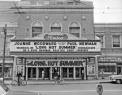
Loew's State became notable for being the place where Elvis
Presley got his first job, in 1948, as an usher and later
being fired, and then re-instated.
Loew's auditorium was built into an
older warehouse which actually fronted Second Street. Second Street wasn't
a suitable address for such a prestigious theater so Loew's acquired a
single storefront on Main Street which aligned with the
warehouse/auditorium on 2nd. Unfortunately, there was an alley between the
two buildings which the City of Memphis would not allow Loew's to close
off. The solution? The storefront was gutted and turned into a lovely
half-block-long lobby which ended in a single grand stairway. This
stairway rose to a level high enough to allow a bridge over the alley and
entered the auditorium at balcony level. When the theater was not at
peak capacity, the sign on the stairs said "downstairs closed"
instead of the usual "balcony closed" so familiar to
movie-goers in the 1960's.
The State had a vaudeville stage and pit. The hall was never renovated
during its life and so retained all it's Thomas Lamb "Loew's Adam" decor
to the end. The first organ in the Loew's State was a Moller. It was
replaced by a Wurlitzer in the mid-1920's. The 2 big Loew's theaters in
downtown Memphis were under construction at the same time.
The last movie at Loew's State was "WUSA" with Paul Newman and Joanne
Woodward.
| |
|
|
The State had a vaudeville stage and pit. The hall was never renovated
during its life and retained all it's Thomas Lamb "Loew's Adam" decor
to the end. The first organ at Loew's State was a Moller. It was
replaced by a Wurlitzer in the mid-1920's. The 2 big Loew's theaters in
downtown Memphis were under construction at the same time.
The last movie at Loew's State was "WUSA" with Paul Newman and Joanne
Woodward.
Loew's Metropolitan at 152 S.
Main is listed in the 1920 Memphis Directories. The name
changes to Loew's State in the 1921 Directory and continues up
to 1958. We've not been able to verify beyond
1958. |
 |
| |
1953 Ad |
|
|
The Demolition of
Loew's State - 1972 ... |
| |
 |
 |
 |
 |
 |
| |
|
...
All photos, collection Vincent Astor |
|
|
| |
"I
worked as an usher at the Loew's State the year before Elvis. It was the
summer of '47 when "EASY TO WED" with Esther Williams and Van Johnson and
"CAESAR AND CLEOPATRA" with Vivien Leigh, Claude Rains and Stewart Granger
played there. The manager was right out of a comic book… but not funny. He
thought because he was the manager of the Loew's State, he was ruler of
the world. My classmate, Fred Dennison, told me about the job. Poor Elvis.
No wonder he got fired by that ass.... However, Elvis was reinstated… so
maybe the manager got fired."
- Frederick Regenold
"
The Big Bands of the 40's-50's frequently appeared at Loew's State. For
the regular price of the movie, you got a first run film and then a stage
show featuring one of the bands - usually when they had a hit record. I
remember seeing Vaughn Monroe's show in 1947 when he had a major hit of
'Dance Ballerina Dance' . And during this same period Louis Prima
and Keely Smith appeared with their stage show."
- Gene Gill
|
"My Mother took me to Loew's
State Theatre for my birthday to see the picture show and Sammy Kaye's
Orchestra Show which was also playing. Sammy Kaye invited guests from the
audience to lead his band and I was picked. What a thrill for me ... and I led
the band to the tune of 'Orange Colored Sky'. I was presented a
baton from Sammy Kaye and a picture of my performance, which I still have
to this day." -
Jo Lynn Yarbrough Smith |
 |
"Anyone who ever
went to the movies at the Loew's State remembers the feeling of royalty as
you walked up and up from one landing to the next between walls and
ceilings of mirrors. And with all the glass chandeliers. It was a pretty
spectacular entrance! It wasn't until many years later that I figured out
that all those mirrors were just to make a long tunnel seem wider and
shorter. They were really leading us up and over the alley behind Main St.
and into the theater which was actually in a building on Second. Those
rascals !" - Eddie Cooper,
Memphis
"My Dad was the
manager of the Loew's State from 1949 till the mid 1960's, not too sure.
As many may know, my Dad did fire Elvis Presley when he was an usher
scuffling with another usher in the early 50's, but eventually hired him
back. Truly amazing....a kid is an usher and about 5 years later, he is
coming back to see himself up on the screen. That was quite a night. My
Dad held a private screening for Elvis, his parents, and friend visiting
from Hollywood, Nick Adams, and of course the Groom family was there in
full force! I was a candy girl at the Loew's State during my
high school years and met my future husband who was an usher at Loew's
Palace".
- Micki Groom Creamer |
| |
|
| |
|
|
|
| |
| |
| |
|
|
| |
|
|
| LUCIANN
.
2432 Summer Av . Opened 1939 . 1014 seats . Closed
1958 |
| |
|
|
|
|
| |
|
|
|
The Luciann was gutted and converted into
a bowling alley after it closed. Later it became the Paris Adult
Theatre. The theater was built by Michael Cianciolo and it was named for
his two daughters Lucy and Ann. In 1966 it was turned into a night
club. But by the 70s, the neighborhood had changed and it was sold
to Paris Adult Group for Adult movies. The Luciann listing has been
verified in the 1940 through 1958 Memphis Directories.
"The Luciann Theater was owned
and run by Augustine Cianciola. He owned the Plaza and the Rosemary also." - Pat Grisanti, Princeton, Texas
"Michael Cianciolo built The Luciann in 1939-40 and his son Augustine ran
it. The Luciann is named after sisters Lucy Cianciolo and Ann
Cianciolo Angelo. In 1958 it became a bowling alley; in 1966 it
became a night club called "The Party" which was very popular with Memphis
Sound artists and the public. The Luciann, perhaps had the first
lighted dance floor in the city. In the early 70's it was sold to
the Paris Adult Group and for a number of years the concrete "Luciann" was
covered by plywood. About one quarter of the auditorium was being
used for adult films in 2011, with a few of the "venetian blind" side
lights still intact and some architectural details. Therefore,
technically, there is still one screen operating under the Paris
management. The exterior is amazingly well preserved as opposed to
many other former neighborhood theatres in Memphis. Another
Cianciolo operation, the Rosemary Theatre, was named for the third
daughter, Rosemary. It did not survive the 1960's."
-
Vincent Astor, Memphis |
| |
|
|
| |
|
|
|
|
| |
| |
| |
|
|
|
|
| |
|
|
|
|
|
LYCEUM
Corner 2nd
and Jefferson . Opened 1894 . 2010 seats .
Demolished 1935 |
| |
|
|
|
|
 |
 |
 |
 |
|
Lyceum - 1935 |
Lyceum - Interior |
Vintage
Lyceum Postcard |
Lyceum-Loew's 1916 |
| |
|
|
|
|
|
There was an earlier Lyceum on
the corner of 3rd and Union, which was built in 1888, but it burned to the ground in
1893.
A new and very grand Lyceum was built by H. L.
Brinkley in 1894 at 2nd and Jefferson. By all accounts, this new
Lyceum interior was lavishly decorated in a Spanish motif, with imperial
green, rich yellow, and gold. It was the first Memphis
playhouse to have electric lights. The first performance was 'The
Count de Grammot', which opened to a packed house. The Lyceum became
the place to go, and night after night it was filled
with the elite of Memphis Society, who sat in the box seats which were
known as 'The Golden Horseshoe'. In a very short period
the Lyceum was considered the finest theater in the South.
All famous actors of the day appeared here: Maud Adams,
Lillie Langtry, Anna Held, George M. Cohan, etc.
But new theaters opened downtown and the Lyceum began to |
|
 |
 |
|
Two 1924 Playbills |
|
|
|
decline. To survive, it switched to
vaudeville in 1919, and then to motion pictures and
finally boxing and burlesque. Ultimately it lost
the battle and closed in 1935 and was demolished the
same year. Today the site of the Lyceum is
occupied by Regions Bank Building.
The Lyceum is listed in
the Directories from 1899 up to 1935. In
1919-1920, the name changed briefly to Loew's Lyceum.. |
|
|
|
|
 |
 |
 |
 |
 |
 |
|
Birth of a Nation 1916 |
CBC
Graduation-'06 |
CBC
Silver Jubilee |
CBC
1877 |
Lyceum Posters 1910 |
Actor Poster |
|
|
|
|
|
|
|
 |
 |
 |
 |
 |
 |
|
1918 Ads for LOEW's Lyceum
|
Ads 1890-1893 |
Notices 1893-1922 |
Court Case |
1890s Lyceum Program |
|
|
| |
|
|
|
|
| |
|
|
|
|
|
|
| |
| |
| |
|
| |
|
|
LYRIC - JEFFERSON
- MAZDA
293-295 Madison . Opened 1908 . 1400 seats.
|
| |
|
 |
 |
 |
 |
 |
|
Lyric 1935 |
"Jefferson" postcard |
Lyric 1916 |
Jack
Amick |
Jack
Amick letter |
|
| |
|
 |
The Lyric
Theater presented the best in stage and Vaudeville. Sarah Bernhardt
performed here, but in later years, prizefights were held. The theatre burned on January 23, 1941. Today the
site is empty. This theater has a very similar history to the
Lyceum, and it's easy to confuse the two. Billboard
Magazine, 1908, mentions that the Lyric's first manager was
Jack Amick, who had owned The Palace at 135 N. Main. J. J. Amick
also owned Amick's Vaudeville Exchange.
The Lyric is listed in
the Memphis Directories.from 1908 -1930. In 1931 the name
changed to Mazda and it's listed for two years.
1933 is the last listing
and a new name: :Junior Order United
American Mechanics Theatre.
|
|
Billboard 1908 |
|
|
The vintage post card (2nd photo above) shows the Lyric
building with "Jefferson Theater" printed on it, and a
banner across the street reading "Jefferson".
Two years after opening, The Jefferson became the Lyric.
The Billboard Magazine (above) has an article about The
Lyric and about Jack Amick. The articles below
discuss The Jefferson and contradict the dates of the
Memphis Directory listings. |
| |
|
|
|
 |
 |
 |
 |
|
Jefferson item 1908 |
Jefferson 1909 |
Jefferson Name Change
1911 |
Jefferson Ad 1909-10 |
"...I saw the information...regarding the early Palace Theatre which
opened in 1907. You mentioned it was headquarters for Amick's
Vaudeville Exchange. ...James J. Amick was my grandfather. ...
I have a copy of the 1908 Memphis City Directory showing a listing
for Jack Amick, manager of Amick's Vaudeville Exchange and Palace
Theater. It gives his residence as the Arlington Hotel.
Following that entry is the listing for Amick's Vaudeville Exchange
at 135 N. Main. ... Here are the pictures we talked about.
James Jackson Amick was born in Springfield TN 1884 and died in
Michigan February 29, 1940. - Diane Dunn, Round Rock TX -
4/2012.
"...The
Lyric started out as The Jefferson in 1908. Its name was
changed to The Lyric when the management changed in 1911. The
name was changed again to the Mazda about 10 years before it burned
in 1941."
- Stephen Huff |
|
|
| |
|
|
|
| |
| |
| |
|
|
|
| |
|
|
|
|
MAJESTIC |
| |
|
At various times,
from 1908 to 1930, there have been from 2 to 8 different
Majestic Theaters. All 8 have been on Main Street and
there have often been 4 at the same time. They were listed in the Memphis
Directories as #1, #2, #3, #4, New #2, and New #1. The
earliest two are #1 and #2 - first listed in 1909. The
youngest is New #1, first listed in 1915. It gets
confusing!!!
|
|
#1 Majestic |
158 N. Main .
First listing in Memphis Directory -1909 . Listed
1909-1910 |
| |
|
|
|
|
Frank Montgomery purchased The Theatorium from Charles Dinstuhl
in 1908 and renamed it the Majestic #1. This will be the first
of many Memphis theaters owned by Frank Montgomery. His
company was named "The Majestic Amusement Company" and managed all the Majestic and Empire Theaters and was
co-owned by the President R. C. Tarlton and Secretary C. T.
Bridges. In 1919 the Majestic Amusement Co became
"Memphis Enterprises". In 1921 Memphis Enterprises
became "Consolidated Enterprises". |
 |
|
| |
|
| |
|
|
#1 Majestic |
49
S. Main . First listing in Memphis Directory -1912
|
|
| |
In 1910 or 1911, the Majestic at 49 S. Main became the "Majestic No
1". The offices of "Majestic Amusement Company" were
above this theater. On the photo of the theater, it's
possible to read "Majestic No 1 across the top of the
building. The photo below, dates from a 1916 book and the silent
movie is "Captain Macklin" which was released in 1915. |
| |
| |
|
|
|
 |
 |
 |
 |
| Majestic
#1
|
Majestic
#1 Buildins in 2012 |
#1
"Metal Ceiling" |
|
|
| |
|
|
#2
Majestic |
Empire #2 ... Bijou #2 . There were two #2 Majestics
- 146 S Main and 138 S. Main. |
|
|
|
|
|
|
#2
Majestic - #2 Empire - #2 Bijou
- 146 S. Main |
|
Majestic #2 is listed in the 1909-13 Directories.
The Empire #2 is listed in the 1914-1918
Directories. The Bijou #2 is listed in 1922 only. |
|
|
 |
 |
 |
 |
|
146 S. Main |
Majestic-Empire |
Bijou #2 |
Bijou #2 |
|
|
|
#2 Majestic
- 138 S. Main
.
Listed in 1914-18
Directories |
|
|
 |
 |
We now know the photo of the #2 Majestic at 138 S. Main
is the same building as The Strand Movie Theater.
It became the Strand in the 20s. |
|
|
|
|
|
| |
|
| |
|
|
#3
Majestic |
80 N. Main .
First listing in Memphis Directory -1910
. Listed 1910-1913 |
| |
|
Majestic #3 became The Empire #1 around 1914. The photo
of the theater dates from a 1916 book and the movie playing at
the Theater is "Runaway June" which was released in 1915. |
 |
|
| |
|
| |
|
#4
Majestic
|
|
Odeon ... Dreamland ...
Columbia .
177 S. Main |
|
|
Majestic #4 was listed in the 1912 Directory - for 1 year
only. This building housed the
ODEON
from 1907-1908, then the
DREAMLAND
in 1909, the
COLUMBIA
in 1910, and finally
MAJESTIC #4
in 1912. H. Bigler was manager of the ODEON in 1908. |
 |
|
| |
|
| |
|
|
New
#2
Majestic |
135 S. Main .
First listing in Memphis Directory -1912 . Listed
for only 1 year. |
| |
|
| |
|
| |
|
| ...and
Majestic |
144 S. Main - listed in the
1922 Directory. This could be a typo. |
| |
147 S. Main - listed in the
1921 Directory. This could be a typo. |
| |
|
| |
|
|
New #1 Majestic |
145 S. Main .
First listing in Memphis Directory - 1915 .
|
|
|
|
|
The Majestic
most people think of is the one located at 145 S. Main - known as the New
#1 Majestic. The beautiful building, which opened in 1913, is still
there. At various times it had a series of Moller organs during the
silent era. It had 1000 seats and was first listed in the Memphis
Directories in 1915. The Majestic showed silent films until 1936
when the building was sold to Julius Lewis Men's Store. They
occupied the building until 1956. During the 60's it became a
warehouse for Goldsmith's Department Store. In the late 60's it became
the Blue Light Studio (Photography) and in the 90's it was converted to a
brewery and restaurant. During this period they covered over a lot
of the original details.
In 2005, Deni and Patrick Reilly purchased the building and restored it
and opened the Majestic Grille in 2006. This popular restaurant has
consistently been on "Memphis Best..." lists ever since. The two
story building
features a stunning terra cotta facade outlined with stud
lights. On the
north side is a mid-block alley where the theater had large windows on the
alley side to allow ventilation. The interior has been lovingly
restored for a restaurant-pub. The stairs to the balcony were removed and a
suspended ceiling installed at balcony height. Above this, the old decor
has survived including the decorative proscenium. Across the street
at 138 S. main was the Majestic #2 which became the Strand Theatre in the
1920s.
(Thanks to Deni Reilly for filling in the gaps of this history) |
|
|
 |
 |
 |
 |
 |
|
1920s |
Ticket Booth |
Julius Lewis 1940 |
Majestic Grille -
Today |
Majestic Grille Screen Today |
| |
|
|
|
|
|
|
|
|
|
|
|
|
|
 |
 |
 |
 |
 |
|
The old iinterior decor and the bricked up ventilating window: Majestic Grille today.
Collection Vincent Astor:
|
Blue Light 1968 |
|
|
|
|
|
According to many references in vintage periodicals, Frank
Montgomery, known as "The Moving Pictures Man of Memphis" owned
4 Majestic Theaters and The Columbia (Princess). He also owned
theaters in Atlanta, Jacksonville, and Chicago. Montgomery was
considered a master of advertising.
Click
here to read more about Frank Montgomery. |
|
|
 |
| |
Montgomery Calling Card |
Montgomery 1896 photo button |
|
|
|
|
"...The Majestic
Theatre that is the building in which we are now housed...was called The
Majestic No 1 and it was owned by Mr. Bert Jordan. His son Warren who
passed away 2 years ago this August was kind enough to provide us with the
history of the theatre as well as some family pictures. The family also
owned another theatre around the corner on Union. I'm not sure Frank
Montgomery was involved with the Majestic No. 1 - but he may have been!
Construction on the theatre began in 1912 and the theatre opened in 1913.
It remained a silent picture house until 1936, when the family decided to
sell the building rather than take on the expenses of putting in speakers
for 'talkies..." - Deni Reilly, Majestic Grille, 10/2011 |
|
|
|
"Look
also at your 'Memphis Main St' postcards (link at bottom of page) and
you’ll notice the Majestic’s (#2) canopy was over a business as well as
the tiny entryway. The Strand’s marquee was narrower.
Planters Peanuts, south Main store, was in the same building.
The woman not quite visible in the Majestic #1 boxoffice was Bessie
Jerome, my grandmother’s (Bessie Mae Hill Garavelli) best friend. My
mother, Angela Estelle Garavelli Astor, remembers being babysat in the
front row of the Majestic with Bessie’s little boy when they were both
very small." - Vincent Astor, Memphis
.
Click here to see Photos |
| |
|
|
|
| |
|
|
|
| |
| |
| |
|
|
|
|
|
|
|
|
|
MALCO
- HOPKINS GRAND OPERA . ORPHEUM
197 S. Main . Opened:
1928 . 2500 seats . Closed:
1977 . Re-opened as Orpheum 1984 |
| |
|
|
|
|
| |
|
|
|
|
 |
 |
 |
 |
 |
|
Malco |
Malco |
Orpheum
Marque-Night |
Elvis
at Malco
1956 |
Orpheum
|
| |
|
|
|
|
 |
 |
 |
 |
 |
| |
|
Orpheum
Chandelier |
Brides of Dracula Premiere |
Grand Opera Alley 1905 |
| |
|
|
|
|
 |
 |
 |
|
|
|
Malco-1976 |
Malcony
Balcony |
Orpheum Balcony
-1928 |
Orpheum
Posters -1920 |
|
| |
|
|
|
|
|
 |
 |
 |
 |
|
Hopkins Grand Opera |
Orpheum 1916
|
1906 Postcard - Hopkins |
1908 Postcard - Hopkins
|
|
| |
|
|
|
|
The Hopkins Grand
Opera House opened on the corner of Main and Beale in 1890 and was
touted as the finest opera house outside New York City.
Originally used for opera, the Grand Opera House soon was featuring
vaudeville acts, and in 1907 became part of the Orpheum circuit. It was
renamed the Orpheum Theater that same year. |
| |
|
In 1923, a fire broke out during a vaudeville show and
the old Orpheum Theater was burned to the ground. Five years later, on the foundation of
the old theater, a new Orpheum Theater was built at a then-staggering cost
of $1.5 million. Twice as large as the old theater, and much more ornate
and luxurious, decorated in the style of Francois I, the Memphis Orpheum
was beyond anything the builders of the old opera house could have
ever dreamed. It opened on November 19, 1928. The
auditorium, which seated 2500, was decorated in shades of gold, red
and cream, and included a huge stage, orchestra pit, balcony and
domed ceiling. The Orpheum also owned a large Wurlitzer Organ.
The grand |
 |
|
lobby had twin staircases, enormous crystal
chandeliers and gilded plasterwork. The Orpheum Theater
also contained a nightclub called the Broadway Club, as well as smaller
lobby spaces to the sides of the grand lobby. |
Mae West - Orpheum
stage 1938 |
|
| |
|
By 1940, after the heyday of vaudeville, the Orpheum Theater was purchased
by the Malco chain and switched to a movies-only format. The renamed MALCO
Theater continued to run first-run films until it closed in 1977.
The last movie was "House of 1000 Pleasures" and "The Four of
Us". In
1982, the Memphis Development Foundation acquired the Malco Theater and
undertook a $5 million renovation project which brought the palace back to
its 1928 glory after decades of decline. In January 1984, a grand
reopening ceremony was held.
Today, it has been re-named the Orpheum Theater and is Memphis' premier
venue for touring Broadway shows. The Orpheum Theater has hosted more
touring Broadway productions than any other theater in the US. In addition
to its stage shows, the Orpheum hosts concerts and everyone from the
Vienna Boys Choir to Patti LaBelle to Harry Connick, Jr. have graced the
stage. It is also the home to two of the city's finest local arts
organizations, the Memphis Ballet and the Memphis Opera.
The MALCO name
appears in the 1936 Memphis Directory at 81 Union. The
Orpheon Name is listed in the 1936 book at 197 S. Main.
In the 1940 through 1957 Memphis Directories, the Malco
appears as 197 S. Main. |
| |
|
|
|
 |
 |
 |
 |
 |
| Orpheum
Wurlitzer |
Orpheum
Balcony |
Orpheum
1984 |
Malco-Closing
1976 |
Malco-Lobby-Concession
1975 |
| |
|
|
|
|
 |
 |
 |
 |
 |
 |
|
Colored Entrance |
1937 Ad |
1928 Opening |
Milton Slosser |
Orpheum
Postcard |
Orpheum
Postcard |
| |
|
|
|
|
|
|
|
"My father loved the movies and vaudeville and would take my mother and
my two older brothers and me to the Orpheum to see a vaudeville show
and movie. He would park our 1936 Plymouth or our 1930 Ford Model A
Coupe on Beale Street and we would walk up to the Orpheum passing Tony's
Fruit Stand on the northeast corner of Beale and Main. In those days,
there would be an hourlong vaudeville act followed by a new movie. We
always liked to sit in one of the loges off the mezzanine on the south
side of the theater. A Memphis orchestra under the direction of Nate
Evans would rise up out of the floor in the orchestra pit and play for
the performers. One of the trumpet players (sometimes on clarinet) was
Hilburn Graves, known as Pappy Graves. He was my first clarinet teacher
when I took lessons at the old O.K. Houck Piano Company on S. Main near
Union Ave. During the WWII years, an organist, Milton Slosser. would
rise up out of the floor and play the mighty Wurlitzer Organ and we
would sing the words to his songs that would be flashed on the screen.
Lots of entertainment." - Donald Canestrari, Memphis
One of the favorite shows to come to the Orpheum was Blackstone the
Magician. He would perform there for a week to packed houses. He would
always hypnotize a girl and saw her in half with a big buzz saw. I can
still hear her screaming as the saw made a loud terrible sound as it cut
in two a piece of 2x4 lumber beside her. Another performer that my
dad liked was Dave Avalon, a Russian orchestra leader who brought his
show there often" - Donald Canestrari, Memphis
.
"Everyone enjoyed going to the Malco for first run movies in the
50's. When
the movie ended, the giant Wurlitzer organ would rise out of the
orchestra pit and Milton Slosser would entertain the audience for about
20 minutes. When the "bouncing ball" came on screen, we all sang
along".
I also
remember seeing Marilyn Monroe at the Malco (1953), in town to promote
the opening of "Gentlemen Prefer Blondes". The city even renamed Monroe
St. "Marilyn Monroe St" for the day.
-
Gene Gill, Pasadena CA
"I moved to
Memphis from a small town in Arkansas in 1944, and was dazzled by the
"big city". Soon after I arrived, I went to the Malco and was awed
by the grandeur of the theater, especially when I saw that gorgeous
white organ rising out of the orchestra pit. I will never forget
Milton Slosser playing my favorite song of the day, 'Besame Mucho". - Bob
Mann, Albuquerque NM
"When I was
a teenager, I worked one summer as an usher at the Malco, whose owners
also owned the Princess. The Malco had a huge popcorn machine, and
the Princess had an ice machine that made more than it needed. So
one of the daily jobs of a couple of ushers was to transport popcorn to
the Princess and ice to the Malco". - Eddie
Cooper, Memphis
"...My
grandfather, Chalmers Cullins was involved in the theater business since
the early 1900s. He began selling popcorn at the Orpheum and went
on to work there. Later, my grandfather owned the Idlewild
with his brother Edward Cullins and I believe Nate Evans was also
involved. He also owned the W. C. Handy and The Sovoy theaters.
These two were for the Black Community and featured live music as well
as movies". - Julie Best Erwin -10/2011
"...Chalmers
Cullins was my grandfather and I have some interesting cassette tapes on
which my grandfather is talking about the old days at the Orpheum. I
remember dancing on the stage when I was about 5, when my grandfather
was closing up the theater at midnight. I recall watching Blackstone
perform from backstage and later eating a midnight dinner with him and
my grandparents at Burkles Bakery. We had the roast beef and homemade
rolls, mashed potatoes and vegetables. It seemed strange eating at
midnight. Blackstone had the most piercing blue eyes I ever
encountered". - Gail Collins - 10/2011
|
| |
|
|
|
|
|
|
|
|
|
|
|
| |
| |
| |
|
|
| |
|
|
|
MEMPHIAN .
PLAYHOUSE
on
the
SQUARE . CIRCUIT PLAYHOUSE
|
|
51 S. Cooper . Opened 1935 .
Closed 1985 |
|
|
|
|
In the 1960s
Elvis used to rent the Memphian Theater, now the Circuit Playhouse, to
watch the latest films with his friends. These viewings were often all
night affairs. It was the only way for him to have such a gathering out of
view of the public. Though its days as a movie theater ended more
than two decades ago, the Memphian remains in use
today, as one of the city's best-known smaller
live theaters, a role it has served since 1986.
That was the year the vacant Memphian was
renovated and transformed by the Circuit Playhouse
Company into Playhouse
on the
Square,
a showcase for legitimate theatre, musicals,
comedy and children's theatre. In 1992 and
1997, the Playhouse expanded into empty
storefronts adjoining the old theater and the
Playhouse on the Square moved to a new building.
The Memphian became Circuit Playhouse. The
Playhouse Company now offers acting classes in its
facilities. |
 |
|
| |
|
|
 |
 |
 |
 |
|
<< All 3 photos, Collection of Vincent Astor
>> |
1953 Ad |
|
| |
|
|
|
In the 1931 Memphis Directory,
this address is listed as THE MALCO. In the 1932 Directory it
becomes THE MEMPHIS. In the 1933 Directory it become THE MEMPHIAN
and is listed continuously through 1958. We've not been able to
verify beyond this date.
"In
the mid-60's, the Malco turned the Memphian into a first- run theater"
- Walter Bolton
"I
remember seeing 'Gone With the Wind' at the Memphian in 1940. I was
only 7 years old, but still vividly remember this experience. Two
years later I saw 'Bambi' here and cried like all the other kids in the
audience.
- Gene Gill, Pasadena CA
"In 2010, Playhouse on the Square moved to a new building across the
street. The Memphian building is now Circuit Playhouse."
- Vincent Astor, Memphis
|
| |
|
|
| |
|
|
|
|
|
|
|
|
|
| |
|
|
|
|
| |
|
|
|
|
|
NEW DAISY
Address:
330, 332 Beale St - Opened 1942- ... 1083 Seats
|
| |
|
|
|
|
 |
 |
 |
 |
 |
| |
New
Daisy - 2012 |
Dylan
- 1999 |
Awards |
Tile floor of New Daisy |
| |
|
|
|
|
|
Located almost directly across
the street from the Daisy Theatre. It was built by Paul Zerilla and
his partner Joe Maceri. Originally it was a movie house, but
occasionally sponsored live music. Today, the New Daisy is one of the
top performing venues for both upcoming and established R & B and rock
music artists. It is also available for rentals. But there's
been recent talk of closing the New Daisy.
The NEW Daisy is listed in the
1942 through 1958 Memphis Directories. |
| |
|
|
|
|
| |
|
|
|
|
|
|
| |
| |
| |
|
| |
|
| NORMAL .
STUDIO 535 S. Highland - Opened
1932
. 400+ Seats . Closed ??
Renamed STUDIO 1960s |
| |
|
|
 |
 |
 |
 |
| |
Studio Circa 1960s |
1937 Ad |
Ad for the Studio |
|
|
|
The first
listing for the Normal in the Memphis Directories is 1932 and it's listed
continuously after that up to 1958. We've not been able to verify
later dates. |
|
|
|
|
“Normal” was the name of the community, in fact the first name
of the University of Memphis was Normal State Teacher’s
College. Now Newby’s concert hall. The entrance to the
Normal/Studio/Movie House/Newby's is almost exactly like the
entrance to the Bristol with the one-cashier-can't-sit down
box office. The Studio once was operated as "The Movie
House".
- Vincent Astor
"... enjoyed the
pics and history of the old Memphis theaters...I believe the
Normal must have opened at least by the early thirties.
It was there when I started school (Messick 1934-1946) and
used to go to the "Nickel Uproar" at the Normal every
Wednesday after school. The manager was a good man, last
name Augustine. Most days it cost a dime admission for
kids. He waited until I was about 14-15 and said "Jack,
don't you think it's time you started paying adult admission?"
Soda-jerked at Normal Drugs during WWII and went to the
theater when it closed at 10 PM to see the end of the current
movie. Incidentally, the first movie I ever saw was a
double feature - a talkie with Buck Jones and a silent with
Charlie Chaplin at the Madison with my grandfather".
John A. Osborne MD 10/2011 |
| |
| |
|
|
|
| |
| |
| |
|
|
|
| |
|
|
|
|
OLD DAISY
327, 329,
331 Beale St . Opened 1913
. 660 Seats |
| |
|
|
|
 |
 |
 |
 |
 |
|
Daisy |
Daisy C. 1970s |
Ticket
Office |
|
Tile floor of Daisy |
|
|
|
|
|
|
|
The Daisy is a prime surviving
example of nickelodeon architecture from the early cinema era. The tiny
hall features a grand half dome entrance on Memphis's famous Beale Street.
It's unusual in that the stage and screen are on the sidewalk end. Double
doors on either side of the half-dome enter into small vestibules one on
either side of the stage. Emerging from the vestibules, you have the
audience looking at you! There is a small balcony, vaguely
horse-shoe shaped, supported from above with iron rods. The Daisy is first listed in
the Memphis Directories as the "NEW Daisy" at 151 Beale in 1913.
In 1914 it is listed as "DAISY #2" at 327 Beale and after 1915-18 it is the
only DAISY listed - and the address is still 327 Beale. There are a
few years without listings. It reappears for 1 year in 1922 and the
listing address is now 329-331 Beale. The listing picks up again in
1930-1958 and the address rotates from 329 to 331 Beale. |
|
|
|
|
|
During the 20th century Beale Street served as the business and
entertainment center for African-Americans from all over the Mid-South.
Despite its tiny stage, the Daisy was a prime performing venue on the
so-called "Chitlin' Circuit" from the 1930's up into the 1960's. In
the 1930's the New Daisy Theatre was built directly across the street. It
too survives and is used as a concert venue.
In the1980's the "Old Daisy"
was extensively renovated and reopened as a Beale Street Blues Museum.
Today it is in use as a banquet hall providing live entertainment.
The photo, below, shows the back of the Old Daisy, with the "ghosts" of
the balcony fire-escapes. The Old Daisy's plan was "backwards".
It was built between two other buildings and the balcony fire escape was
in the back alley, the only place it could be., |
| |
1 |
|
 |
 |
 |
 |
|
Back: Fire-Escape Ghosts |
Ticket |
1939
Rental Receipt from Columbia |
Original Daisy |
|
| |
|
|
|
|
|
| |
|
|
| |
|
|
|
| |
|
|
|
|
PALACE
324 Beale St
. 1080 Seats . Opened 1920
. Closed 1955 . Demolished ?? |
|
... Palace
135 N.
Main . Opened 1907 . Closed 1913? |
| |
|
|
|
 |
 |
 |
 |
|
Beale Steet
Palace |
Palace after
1950 |
Beale Street Palace |
Beale Palace
1939 |
| |
|
|
|
 |
 |
 |
 |
|
White Ramble 1942
|
Palace
Letterhead
|
Revue c.1923 |
Palace Tickets |
|
| |
|
The Palace was the South's
largest theatre for African Americans. In 1926 a Wurlizer
Theatre Organ was installed. Count Basie performed here and
"Midnight rambles" were held on Thursday nights for whites at the
Palace for 21 years. Whites were seated in the balcony
and Blacks downstairs. They were discontinued in 1941 because of the
WWII. Nat D. Williams began "Amateur Night on Beale" in 1935 at
the Palace. There is a Historical Marker on Beale mentioning
this event.
The
Beale Palace is listed in the 1922 directory and not listed again until 1931.
After that, the listings are continuous up to 1958. We've not
been able to verify later dates.
|
|
|
|
 |
|
|
|
|
|
Ramble c.1940s |
|
Coming
Soon |
|
Coming Soon |
|
|
|
|
|
|
|
|
Palace Theatre - 135 N. Main Street
There was an earlier Palace Theatre at 135 N. Main which opened
in 1907. It was owned by Jack Amick
who also owned Amick's Vaudeville Exchange,
headquartered at the same address.
This Palace also featured Vaudeville shows
between films. In 1908 Jack became the
first manager of The Lyric Theatre.
The Main Street Palace was listed in the
Memphis Directories from 1908 to 1914.
|
 |
 |
| |
Palace on
Main |
Jack Amick |
 |
 |
|
Palace Ad -
Bilboard 1907 |
Bilboard
1908 |
|
|
|
|
|
"In
addition to movies the Palace featured stage shows and several famous
entertainers got their start here. WDIA had many shows here,
often MC'd by Nat D. Williams or Rufus Thomas". - Walter Bolton
"There was also an
earlier PALACE at 135 Main Street which opened in 1907. It was
headquarters for Amicks Vaudeville Exchange and they had Vaudeville
acts between films". - Dave French, Norcross GA
"This theatre
was known as the “Beale St. Palace” to distinguish it from Loew’s
Palace."
- Vincent Astor, Memphis
"The Palace at 324 Beale first opened, I believe in 1920. This
is the first year that it appears in the city directory. It was
owned by the Barrasso family who ran several African-American
vaudeville and movie theatres in the early 20th Century. They
started out with the Amuse-U theatre at 253 N. Main and the Savoy at
121 South Fourth around 1909. From about 1913 to 1918, Anselmo
Barrasso ran the Metropolitan Theatre at 336 Beale. He then sold
it to the Zerilla family, who opened a new theatre called The Venus at
that address around 1920 - the same year that the Palace opened.
(The old Metropolitan Theatre must have been torn down or burned,
because there is a photo of it in the Memphis Sun, and
African-American newspaper, from December of 1913, and it definitely
is not the same building that is pictured in the photo below of The
Venus). A year later, in 1921, Barrasso bought the Venus".
- Stephen Huff |
| |
|
|
|
|
|
|
|
| |
| |
| |
|
| |
|
|
PARAMOUNT
827
White Station Rd . Opened 1964 .
858 Seats . Closed-Demolished 1990 |
| |
|
|
|
|
There was nothing much to say about it. It was a plain,
somewhat barn-like, suburban hall. It was specially
fitted with a curved screen for the pseudo Cinerama road
showing of "2001 A Space Odyssey". The wide screen,
large-format cinematography,70mm TODD-AO, 6 track stereophonic
sound, music filled soundtrack, presentation of "The Sound of
Music" was shown as a reserved seat road show engagement at
this theater. It started on April 7, 1965 and played for 79
weeks! That's over a year and a half! In the 70s,
the single screen was divided into two screens.
Today there's a Stein Mart where the Paramount was located. |
| |
|
|
|
|
|
|
| |
| |
| |
|
|
| |
|
|
|
PARK
3527
Park Av . Opened 1940s .
814 Seats . Closed 1980 .
Demolished. A Walgreen on the site now. |
| |
|
|
|
|
| |
|
|
| |
|
|
|
The Park opened
between 1940 - 1948. It is listed in the 1946-1958
Memphis Directories. Not checked beyond that date. |
| |
|
|
| |
|
|
|
|
|
|
| |
| |
|
| |
|
|
PASTIME
-
IMPERIAL - LIBERTY - LINCOLN
324 Beale . 318 Beale
|
| |
|
|
First listings in the 1909 Memphis Directories.
The listings continue up to 1917. This was the first African American MOVIE Theater in Memphis.
Opened by Sam Zerilla, who was a member of the Sousa orchestra.
This is the same address as the Beale PALACE which opened in
1920. In 1914 the theater became the IMPERIAL for one
year and then went back to the PASTIME name.
Note: There was also
a #2 Pastime Theater at 252 Main - listed in 1913-1914, and a
#3 Pastime at 318 Beale - listed in 1913. This became the
IMPERIAL in 1914, the LIBERTY in 1915, and the LINCOLN in 1918.
|
|
Please help us
locate a photo! |
|
|
And there were other
IMPERIALS at 121 N. Main in 1912, and 146 N. Main in 1914. . |
|
| |
|
|
|
| |
| |
| |
|
|
|
| |
|
|
|
|
PEABODY
878 S. Cooper . Opened 1930s ???
. 475 Seats .
Closed 1955 ? |
| |
|
|
|
 |
 |
 |
 |
| |
Collection of Vincent Astor |
|
1937 Ad |
| |
|
The Peabody has been the
Memphis Drum Store since 1991 or 1993. The first listing in the
Memphis Directories is 1930 and it's listed continuously up to 1955. |
| |
| |
|
|
|
|
|
| |
| |
| |
|
| |
|
|
PLAZA
3402 Poplar Av . Opened 1953
. Seats ??? . Closed
September 1987 |
| |
|
|
|
|
Located in
Poplar Plaza shopping center at Poplar Avenue and Highland Street. At one
point it had a huge metal spire on top of the front of the building, which
was later taken down and stored somewhere else in Memphis. The
theater was opened in 1953 and closed long ago, but during the early
1990's Bookstar renovated and occupied the space, keeping the front
entrance marquee. The plaza was a superior movie
theatre. The exterior was clad in travertine marble
(along with the rest of the Poplar Plaza shopping center) with
an eccentric stainless steel finial atop the marble clad
vertical sign. The long lobby led patrons past the adjacent
storefronts to a broad orchestra foyer. The restrooms featured
curving walls, curving leather settees and tinted mirrors. The
auditorium opened
up in a broad single floor with a cinemascope screen braced by
backlit stainless steel spirals. Behind the screen was a tiny
stage, really only big enough to hold the big Altec Lansing speakers.
There was room back stage for expansion if live theatre ever came to the Plaza,
but a real stage house was never built. |
|
|
|
This is the theatre where the catch phrase "Elvis has left the building"
may have originated. The plaza's facilities included party rooms and
private viewing rooms on an upper floor. Elvis could go see a movie here
without anyone seeing him, at least that's what he hoped. Seems one night
word got out that he was in the theatre and it started a panic. He slipped
out a side door and the manager wound up shouting that memorable phrase in
an effort to calm the crowd.
The Plaza is
listed in the 1958 Memphis Directory. There was an
earlier PLAZA at 135 N. Main listed in the 1910 Directory. |
 |
| |
1953
Ad |
|
|
"The
photo you have of the Plaza was taken on closing night by Alan
Creswell. The two movies showing - Dirty Dancing and the Principal,
date the photo as Sept. 1987. As of August 2008, the spire
from the Plaza was in a nook at the Fogelman College at U of M. - Brock Sides
"...The Spire or
"Acroterion"
...is no longer in its niche after a building remodeling
at the University of Memphis but to the best of my
knowledge both spires from Poplar Plaza are still in the
U of M art collection.
I have not discovered the fate of the two
replicas which stood inside Bookstar..." - Vincent
Astor, 12-2011 |
|
|
|
|
|
|
|
|
|
| |
| |
| |
|
|
| |
|
|
|
PRINCESS
- COLUMBIA - LOEW'S
PRINCESS - PARAMOUNT |
|
169 S.
Main St . Opened 1912 . Seats 641 . Closed
1969 . Demolished 1972 |
| |
|
|
|
An article
in the Commercial Appeal mentions that The Princess was originally a
Nickelodeon named COLUMBIA which opened in 1906. It was acquired
by Frank
Montgomery, the "Moving Picture Man" in 1910, from C. E.
Denton. It's safe to say that it
was one of Memphis's oldest theaters. The
Memphis Directories list a COLUMBIA at 177 S. Main in 1910.
Another COLUMBIA is listed in 1914 at 318 Beale. Only those 2
years have listings. The first PRINCESS listing is 1912 at
167-171 S. Main. In the 1914 listing the address becomes 169-171
S. Main. The listings continue up to 1918 when the
name changes to LOEW's PRINCESS. There are no listings from
1919-1921. Listed for 1922 with no additional listings until
1930. In 1932 the name changes to PARAMOUNT for one year.
The Princess listings reappear from 1930-1958. We've not been
able to verify later dates. |
|
|
|
|
 |
 |
 |
 |
|
Princess 1916 |
Col: Richard Brashier |
1918 Ad for LOEW's
Princess |
1953 Ad |
|
| |
|
"The
Princess on Main was also an interesting theater. It was owned
by Malco and they would show most of the Republic B westerns
there. They would first run a lot of the B movies like the
Bowery Boys there also. In later years after B movies went away
it became a last run house for many movies and usually had a
triple feature. It was one of the first theaters to have air
conditioning. But it had the old water cool system which made it
very cold in summer but also very moist in the theater. You
would come out of the theater almost damp. The real
interesting thing about the Princess was that the refreshment
stand was outside on Main street. You could stop and buy
something at the refreshment stand without going into the
theater. The stand had a lot of items including Popcorn, candy,
hot dogs, french fries, drinks and some of the best soft serve
ice cream around. A lot of people downtown would have a quick
lunch at the Princess refreshment stand. The
Princess stood on Main next to the alley between Beale and
McCall so it had an alley entrance for African-American
customers. It was a very narrow theater but it had several
balconies." -
Walter Bolton
"The most memorable aspect of the Princess had to do with the alley. It’s
convenience to Main street made it usable for personal purposes as there
was a storm drain there. The stink at the Princess was
legendary and lingered long after the theatre closed, inside and out."
- Vincent Astor |
| |
|
|
| |
|
|
|
|
| |
| |
| |
|
|
| |
|
|
|
RIALTO
983
Jackson . Opened 1920s .
Seats 718 . Closed 1950s |
| |
|
|
 |
 |
 |
| |
Collection:
Vincent Astor, 2011 |
2011 |
| |
|
|
|
The Rialto is
first listed in the 1930 Memphis Directories and was listed
continuously up to 1958. We've not been able to verify
any later dates. |
 |
 |
| |
Rialto
Ticket |
1953 Ad |
|
| |
|
|
|
|
| |
| |
| |
|
|
|
| |
|
|
|
|
RITZ
- GUILD - EVERGREEN - CIRCUIT
PLAYHOUSE
1705
Poplar . Opened 1930? . Seats
800 . Closed 1967 |
| |
|
|
|
 |
 |
 |
 |
|
The Ritz |
1.
The oldest photo of the Ritz |
2. The
Evergreen |
3.
The
Evergreen |
| |
|
|
|
|
The Ritz on Poplar
is listed in the 1930 through 1958 Memphis Directories.
The address varies from 1705 to 1707 Poplar. |
| |
|
|
|
|
"Here
are current photos of the Ritz/Evergreen. I would suggest
renaming the section Ritz/Guild (now the Evergreen). You
can see the three center windows and the support for the
vertical are common to almost all the photos.
The first photo
(1)
is the oldest known photo of the Ritz. The three windows
and the support for the vertical sign are clear. A streetcar ran down
Poplar at the time. There was a canopy but no marquee (forgot to check the
date). The marquee in the photo you have was the second edition and
survived through the Guild and Movie House on Poplar days. It was removed
due to structural problems when the theatre became the Evergreen Movie
Theatre and replaced with a flat signboard. When Circuit Playhouse bought
the building this was removed and the cloth sign was added. This same sign
now reads "Evergreen. This should settle the discussion. This is the
Ritz, Guild, Movie House, Evergreen, Circuit Playhouse, Evergreen on
Poplar Ave. It is in very good shape and in regular use". -Vincent
Astor. |
| |
|
|
|
 |
 |
 |
 |
 |
|
4.
Col -
Vincent Astor |
5. Col
- Vincent Astor |
6.
Col - Vincent Astor |
7.
-Vincent Astor |
Circuit Playhouse |
|
| |
|
|
|
|
Photo 7
is of a beautiful plaster wreath with lights in the scallop
shell at the bottom. Recently re-gilded. All the original lights
remain somewhere in the remodeled building. Photos 4-5 are
the basically unchanged cove-lit lobby. One side has the
original concession stand, now the active box office.
Photo 6 is the west exit from the auditorium, the plaster newly
gilded and looking very much the same as always.
My brother
managed "The Movie House on Poplar", as the Guild became known
during the "Rocky Horror" days. I also remember that the
Guild marquee was painted gold. Ergo, the guild was guilded".
- Vincent Astor |
 |
| |
1953 Ad |
|
|
There were other Ritz Theaters - One on Mississippi and one on
Madison. Neither of these is listed in the Memphis Directories. |
 |
 |
 |
| |
1490
Mississippi |
Madison
|
April 4,
1950 |
|
| |
|
|
|
"There were
two different Ritz Theaters. At one time the Guild was named The
Ritz... In addition, in
segregated Memphis, the "white Ritz" was on Poplar, and the "colored
Ritz" was on Mississippi. The one on Poplar had a large fire and
after it was re-modeled, it became an art house and the name was
changed to GUILD."
- Walter Bolton
"The
Ritz you show as the second Ritz is the Idlewild under another name
(compare the photos) I remember that incarnation well. If I remember
correctly, the full name of that building would be the Idlewild, Front
Street, Capri Art, Ritz, P.O.E.T.S. (as theatres). It was also divided
into several storefronts and un-divided to become a gay bar called G.
Bellington Rumples. It presently is a party room called The V" .
"The Ritz on Poplar and Evergreen
still stands. Later photos show the same
marquee reading “Guild” It’s full name would be the Ritz,
Guild, Movie House, Evergreen (marquee removed), Circuit Playhouse,
currently renamed the Evergreen.
The
third photo is the Idlewild on Madison, look at the marquee and the
glass striping and the three small windows.
The other one should be the Mississippi Blvd location. The building on
Madison was only the Ritz for a short time.
-Vincent Astor |
| |
|
|
|
| |
|
|
|
|
|
| |
| |
| |
|
| |
|
|
ROSEMARY
1396 Jackson Av . Opened 1930 . Closed
1955 - 1970's ?? . Seats 1100 |
| |
|
|
The Rosemary is
listed in the 1930 through 1958 Memphis Directories.
:...The Rosemary was at the corner of Jackson and Watkins.
It did not close in 1955. I saw the Beatles "A Hard Days
Night" when it came out, I guess in 1964. I think it
closed not too long after that though. Maybe '66-'67.
When it was torn down, they built a First Tennessee Bank.
I think it was open for several years and then it became
something else. Not sure what it is now. The
Rosemary was a great little neighborhood theater".
- Roy Archibald |
|
|
|
 |
 |
 |
|
Side view of Rosemary |
Collection: Richard S. Brashier |
1953
Ad |
|
| |
|
| |
|
|
|
| |
| |
| |
|
| |
|
|
ROSEWOOD
1905 S. Lauderdale
St . Opened 1950 . Seats 800
. Closed 1963 . Now a church. |
| |
|
 |
 |
 |
 |
|
Rosewood |
Rosewood Church |
1953 Ad |
Rosewood Ad - 1959 |
|
| |
|
|
The Rosewood is
listed in the 1958 Memphis Directory.
"As a native Memphian,
having grown up there in the fifties I have just had more fun with all
this history! I lived near the Rosewood during that era and my friend and
I would walk there on Saturdays where we'd spend the day for .25 cents,
snacking, watching two double features, a serial, cartoons, and the news!
Those were the days! Also I do remember going to the Royal (below) and I promise
you, the admission was 9 cents. I feel certain I'm right about that. No,
we'll never forget entering the theatre and having to look over your
shoulder to see what was on the screen. I was almost holding my breath to
see if you had included two of my favorite haunts, and there they were
back to back! ...By the way, the seats at the Rosewood were red
velvet". -Suzanne Boushe Minotto |
| |
|
| |
|
|
|
| |
| |
| |
|
| |
|
| ROYAL
1320 S. Lauderdale St.
. Opened 1930 . Seats 375
. Closed 1955 ? .
Now a Recording Studio. |
| |
|
|
The
Royal is listed in the 1930 through 1955 Memphis Directories at this
address. It is not listed after 1955.
The theater was turned into a recording studio and became the home
base of Hi Records, which is still in business.
"At the
Royal Theater, when you went from the lobby into the audience, the
room was backward. You would be walking toward the projection room
and the screen would be at your back and you would be facing the
viewers. You would have to turn around to see what was playing on the
screen. This was the only movie theater that was 'backwards'". - Donald Canestrari , Memphis |
 |
| |
|
|
"The
comment that the Royal was the only theatre with the reversed
floor plan is incorrect. The Daisy also has a backward floor
plan and is older by 17 years. The obvious reason
the Old Daisy's plan is backwards - it has a balcony and was
built between two other buildings. The fire escape was in the
back alley, the only place it could be". - Vincent
Astor, 3-2012 |
 |
| |
1953
Ad |
|
| |
|
|
|
| |
| |
| |
|
|
| |
|
|
| STRAND -
MAJESTIC -
LOEW'S STRAND
138 S.
Main . Opened 1920s . Seats 1085 .
Closed 1975 |
| |
|
|
 |
 |
 |
 |
 |
| |
|
Strand-Majestic |
1925
Ad |
Loew's
Strand - 1928 |
|
|
|
|
|
|
The Strand
was just north of Loew's State with maybe a couple of small storefronts
between. It wasn't as grand as the other Main Street movie
cathedrals--probably a little above the Princess just up the street. There
were pillars supporting the balcony which caused some visibility problems.
By 1964-65 the Strand had gone to porn, the fate of many downtown theaters
across the US in that era. In an attempt to maintain their dignity, or
maybe to reduce pressure from the vice squad, they always ran a double
feature with some entirely conventional rerun as the main show. So you had
to sit through a Robert Mitchum war movie or Doris Day musical before
getting to the good stuff. The porn would probably be
considered mild by most folks nowadays, but was
certainly controversial enough in the 60s. Even so, the
Strand was constantly in conflict with the vice cops.
The newspapers either censored their ads or refused to
take them altogether, and I think the theater was raided
and closed briefly a few times. Still the old
Strand was |
|
 |
|
1953 Ad |
|
|
|
popular enough with the sailors from Millington and college
students, etc. to turn a profit for a few years. Before
the Strand occupied this building, it housed one of the
MAJESTIC Theatres.
The Strand is
first
listed at this address in the 1922 Directory for one year.
The listing changes to LOEW'S STRAND from 1930-1933 and then
goes back to STRAND in 1934-1958. We've not been able to
verify later dates. |
| |
|
|
| |
|
|
|
|
| |
| |
| |
|
|
| |
|
|
|
SUZORES #1
869 Jackson.
Opened 1930. Closed 1981. 950 Seats. In
2010, the tile lobby floor still existed. |
| |
|
|
 |
 |
 |
|
Thanks to
Vincent Astor for the 3 photos above.. |
| |
|
|
| SUZORES #2
279 N.
Main - Opened 1935-36 . Seats 1000 -
Closed 1957 . Demolished 1960s.
|
| |
|
|
 |
 |
|
"Re: The Suzone
#1 was on Jackson: I would swear to it though you cannot really see
the tile floor. I visited Fred Suzore several time trying to see/buy
his Photoplayers but only got shouted at from the upstairs apartment.
The theater had no marquee, just a canopy". - Vincent Astor
"The Suzores #1
was on Jackson and the #2 was on Main. Mr. and Mrs. Suzore had an
apartment over the #1 on Jackson where they stayed when they were at the
Theatre. They had a farm out near Shelby Forest. They also ran
the Bristol for awhile. My sister-in-law is a relative of the Suzore
family". "The old number 1 Suzore on Jackson never had air
conditioning.
|
|
|
During the
summer it had two big fans on both sides of the screen and
they would turn on the fans and open the front doors. It was
very cool but you could hardly hear the movie". - Walter Bolton |
| |
|
|
|
Suzores at 869
Jackson is first listed in the 1930-58 Memphis Directories.
The Suzores #2 is first listed in 1936-1958. We've not
been able to verify later dates. |
| |
|
|
| |
|
|
|
|
| |
| |
| |
|
| |
|
|
THEATORIUM -
MAJESTIC 1 .
158
N. Main Street . Opened 1905 by Charles Dinstuhl |
| |
|
|
This is generally considered
Memphis first nickelodeon movie theatre and the first theatre where films
were the main attraction. Between films, singers sang as slides were
projected on screen. Films shown here included "The Great Train
Robbery".
The theatre was opened by Charles Dinstuhl, who owned
the confection shop next door at 156 N. Main. The theatre was part of
the "Crystal Circuit". In 1908 the Theatorium
was purchased by Frank Montgomery and was renamed the Majestic #1. |
|
|
 |
 |
 |
|
|
Theatorium - Dinstuhl |
C. M.
Dinstuhl |
Variety Jan 1908 |
Billboard Ads1908 |
|
|
|
 |
|
 |
|
Billboard Feb 1908 |
|
Billboard Feb 1908 |
|
|
|
|
| |
|
|
|
| |
| |
| |
|
| |
|
|
VENUS
- METROPOLITAN - GRAND .
336 Beale
Street. Vaudeville Theater.
|
| |
|
 |
 |
 |
 |
|
The Venus
|
Amateur Nite 1923 |
Ad. C. 1920s |
GRAND - 1931 |
| |
|
|
|
|
|
According to the 1924
Memphis Directory, the proprietor of the Venus was Anselmo Barrasso.
From 1913-1918, this property was listed as the Metropolitan Theatre. By
1920 it was The Venus. It may have become The Grand as early
as 1922.
The Venus worked along side the Palace Theatre and the winners
of Amateur Nite got to perform at the more prestigious Amateur
Nite at the Palace.
Winners received $5.00.
See Palace notes above.
The Metropolitan is
listed at 326-336 Beale in the 1913-1918 Directories. The
Grand is listed at 330-32 Beale in 1918. The Venus is listed
at 336 Beale in 1922. The Grand is listed at 332 Beale in
1922-1925. The NEW Grand is listed at 336 Beale in 1930-1933. |
| |
|
| |
|
|
|
| |
|
|
| |
|
|
|
| |
|
|
|
|
WARNER
- PANTAGES
52 S.
Main Street . Opened 1920 .
Seats 2300 . Closed - Demolished 1968. |
| |
|
|
|
 |
 |
 |
 |
| |
|
|
Marque 1940 -
Before Neon |
| |
|
|
|
|
|
|
|
 |
 |
 |
 |
 |
|
Pantages C. 1925's |
1969 - Closed |
Balcony 1943 |
Auditorium 1943 |
Auditorium - c. 1928 |
| |
|
|
|
|
|
|
Originally known as the PANTAGES, the Warner Brothers bought
the building from Pantages about 1928. The lobby was very
small: really only a rear-of-house cross aisle. Built during
the regrettable era of Jim Crow laws, there were two balconies
- a large balcony for the white folks and above that the
"colored only" balcony. It was considered the grandest
theater in town. A brilliantly lighted marquee stretched
the full width of the gleaming white, terra-cotta facade, and
every inch of the interior was covered in ornate, gilded
plasterwork. The building was demolished in 1968 to make
way for a bank skyscraper with a sunken, cheer-less, banal
plaza where the Warner's auditorium once stood. The last
movie at the Warner was "Coogan's Bluff" with Clint Eastwood.
The Pantages is
listed in the 1920 through 1930 directories. The Warner is
listed at this address in the 1930-1958 Memphis Directories.
The address varies from 48 to 52 S. Main. |
| |
|
|
|
 |
 |
 |
 |
 |
|
Pageant 1951 |
Pageant Ticket 1951 |
1965 Ad |
5
' Plaster
Urn |
Pantages Light Fixture |
| |
|
|
|
|
|
 |
 |
 |
 |
|
|
| 1923
Pantages Ad |
1928
Ad |
1953
Ad |
1919
Pantages |
|
|
|
| |
|
|
|
| |
|
|
|
|
|
|
|
| |
| |
|
| |
|
|
W. C. HANDY
2353
Park Av . Opened 1947
. Seats 1102 .
Closed 1955 |
| |
|
|
|
|
The Handy is
listed in the 1948 through 1958 Memphis Directories. |
|
|
|
"...During
the late 1940s, the W.C.Handy Theater
would have a "Midnight Ramble". This was a black only theater at the
time, but when the prime time show was over, a white only crowd
would come in about 11:00 or 12:00 p.m. to see a top
name orchestra. I remember very well seeing the Count Basie Band, the
Lionel Hampton Band, and Lucky Millinder Band. Those musicians would
play their hearts out to a packed house. I remember how entertaining
Lionel Hampton was." -Donald Canestrari, Memphis
"The Handy
featured live music as well as movies" - Grand-daughter Julie
Best Erwin - 10/2011
"...My
grandfather...Chalmers Cullins, his brother, Edward, Nate Evans,
Kemmons Wilson and his partner were all partners in the WC Handy. WC
Handy opened the first night and many top bands played there. There
was also a Saturday night Talent Show. The Handy was built after
several black leaders in the community asked for a large nice theater
to bring their out of town friends to....desegregation made the need
for such a theater fade away..." - Gail Collins -10/2011 |
| |
|
| |
|
|
|
| |
|
|
|
Thanks to the Memphis Public Library and the University
of Memphis Library for many of the photos on this page |
| |
|
Other Theaters
- no photos or little
information available:
|
| |
|
ACE
997
Mississippi Blvd. Opened 1938-42. Seats 700 - Closed
1967. Listed in the 1930 through 1958 Directories. Owned
by Dave Lebovitz.
AIRDOME
2416
Summer. Listed in the 1926 and 1927 Directories.
ALAMO
174 S.
Main. Listed in the 1912 through 1915 Directories.
Click here for a photo.
AMERICAN
72-76 Cooper. Listed in the 1913-1922 Directories.
AMUSE U Nickelodeon
253 N.
Main. Listed in the 1909 and 1910 Directories.
Click here for a photo.
The Amuse U name is used again in 1933 for 1 year at
2424 Chelsea.
AVON -
CHELSEA - ROXY
619 Chelsea Av. Seats 425 . Chelsea is listed
from 1915-1917. "Avon" is listed in the 1937-38 directories. "Roxy"
is listed in 1939 through 1958 Directories.
Click here
for a 1953 ROXY Ad
|
"Name
changed to ROXY in the 40's. Owned by Mr. Ferrante. In
part of the theater, near the front, were dining room chairs bolted
together instead of regular theatre seats"
- Walter Bolton |
CARROLTON
143 N. Main
. Listed in the 1913-14 Directories.
Click here for a photo.
CASINO
109-117
Adams . Listed in the 1909 Directory.
COLUMBIA -
DREAMLAND - MAJESTIC #4 - ODEON
177
S. Main . 318 Beale .
See MAJESTIC 4 Info above.
Columbia is listed in the 1910 Directory on Main and in the 1914
Directory on Beale. Dreamland is listed in the 1909
Directory as 177 S. Main.
DeSOTO
868
Arkansas . Listed in the 1914 -22 Directories.
Picks up again in 1942-1948 for 1 year.
EAST END
PLAYHOUSE
East
End Park on Poplar .
Click here
for a mention in Billboard 1908.
ECHO
Cooper-Trimble . Listed in the 1913-1914 Directories.
EDEN
229 E.
McLemore . Listed in the 1914-1915 Directories.
ELECTRIC
2575 Carnes
. Listed in the 1918 Directory.
EMPRESS -
LAMAR
1656
Lamar . Lamar is listed at this address in 1915.
Empress is listed in 1916.
ESQUIRE
2472 Carnes
Av . Opened 1946 . Closed 1955 . Seats 706 . Now a church.
Listed in the 1946-1955 directories.
FLEXER
1705 Poplar
. Listed in the 1948 Directory.
GEM
258 N. Main
. 5th and Greenlaw . In 1908 the manager was J. W.
Minor. Listed at 258 N. Main
in 1909. Listed at 5th-Greenlaw in 1915-1916.
GEORGIA
663
Mississippi Blvd . Opened 1920
. Closed 1955 .
600-625 Seats . Owned by Dave Lebovitz
. The Georgia is listed in the 1940 through 1958 Directories.
Click here
for a photo
HARLEM
1248
Florida . Opened 1935 . Closed 1957 . 700 seats
. Owned by Dave Lebovitz The Harlem is listed in
the 1935 - 1958 Memphis Directories.
HYDE PARK
1988 Chelsea . Opened in 40's. Closed 1955 ?. Listed in the 1946-55 directories.
IDLE HOUR
269
N. Main. Listed in 1922 Memphis Directory.
IMPERIAL -
LINCOLN - LIBERTY
See PASTIME Information above.
JEFFERSON
293-295 Madison .. The Jefferson dates from 1908
. The name was changed to
The Lyric
in 1911, and in the 1930s to
Mazda.
The building burned in 1941.
See Lyric Information above.
JOY -
CAMEO
278 E. McLemore.
Opened 1935 .
Closed late 1950s . Seats 612. The Joy is listed in the 1935
- 1958 Directories.
Click here
for 1937 JOY Ad.>-
Click here
for 1953 JOY Ad
LASCA
1314
Madison . Listed in 1915-1916 Directories.
LITTLE FARBAND
638 Alabama
. Listed in the 1932 Directory.
MADISON
1325 Madison . Opened 1920s. Closed 1960s .
638 seats . Now a parking lot. The Madison is listed in the
1931 through 1958 Memphis Directories.
Click here
for 1953 MADISON Ad
|
"...located on Madison at Cleveland. The Madison stayed open
until the mid 60'S. It, along with the Lamar, was the
last of the neighborhood theaters that continued daily operations
long after all the others had closed or had gone to Fri. Sat. Sun.
operations. The Madison always operated on a daily basis until the
owner died and they closed the theater."
- Walter Bolton |
MADISON AIRDOME
Cleveland-Monroe . Listed in 1915-1916 Directories.
MALCO
PALACE
79-81 Union
. Listed in the 1936-1939 directories.
MAZDA
293 Madison Was previous named
The Lyric,
and before that,
The Jefferson.
See Lyric Info above.
MAZE
315 Beale
. Listed in the 1907 Directory.
MEMPHIS -
NEW
MEMPHIS
Washington (between Main-Front) and 80-86 Jefferson. This
Theater dates from circa 1859 to 1870.
Click here
for an 1866 advertisement
NEW
2434 Perez
. Listed in the 1930 Directory.
MOZART AIRDOME
1128 Patton
. Listed in the 1916 Directory.
NATATORIUM
8
Orleans Beale-Jessamine . Listed in the 1899-1900
Directories.
NEWMAN
535 S.
Highland . Listed in the 1930-1931 Directories.
NORTHGATE Frasier
...
Northgate Shopping Center. Listed in the 1957 Directory.
The Building is still there.
Click on links for photos >>>
1. Exterior
2. Auditorium with Balcony
3. Auditorium with Screen.
OPTIC
148 S. Main
. Listed in the 1907 Diectory.
Click here for a photo.
PARKVIEW
2424 Summer Av . Opened 1936 . Seats 1000
PEKIN
298 S. 4th
. Listed in the 1910 Directory.
PERSICA'S GARDEN - NEW
GARDEN
121-125 S. Second. Listed in the 1905 through
1913 Directories.
Click here
for an 1907 advertisement
POPLAR
737
Poplar. Listed in the 1914 through 1917 directories.
QUEEN
90 N. Main. Listed in the 1912 through 1918 Directories.
REX
268
McLemore Listed in the 1912 through 1918 Directories.
RICHARD
-
BEAUTY
-
COLONIAL
98
N. Main Richand listed in the 1912-1913
Directories. Beauty listed In 1915 - 1918. Colonial
listed in 1910 and 1914. There are no listing until 1931 when
the Beauty is listed for 1 year at the same address.
RIVERSIDE AIRDOME
1274
Florida . Listed in the 1916 Directory.
RUBY -
NICKELODEON - STAR
129 N.
Main. Opened 1907 . 320 seats .
Click here for a photo.
The
Nickelodeon is listed in the 1907 Directory. The Ruby is
listed in the 1908-1909 Directory. The Star is Listed in
the 1910-1912 Directories.
|
...Movies with
musical accompaniment interspersed with four live performances
daily. Opened by the Huddleston Brothers, it was known
as "Nickelodeon"
at the beginning and later became known as The Ruby. It
was operated by the Ruby Amusement Company and was considered
one of the first competitions to the Theatorium. |
SAVOY
1268 Thomas
St. Opened 1940 ? . Closed 1959 . 590 Seats. Owned by Chalmers Cullins
.
"The Savoy
featured live music" as well as movies" - Grand-daughter Julie Best
Erwin.
This might be the 3rd Savoy. The Savoy is
listed in the 1939 through 1958 Memphis Directories. There was
an earlier Savoy (Majestic) at 49 Main Street and in 1913 the "New
Savoy" at 121 S. Main.
SCENIC
212 S. Main
. Listed in the 1906-1907 Directories.
SHAMROCK
1320
Lauderdale Listed in the 1915 through 1922 Directories.
SYDNEY HALL
123 S. 4th
. Listed in the 1908 Directory.
TROCADERO
56-58 Hernando
. Listed in the 1901 Directory.
WILLIAMSON
342 Beale . Listed in the 1908 Directory.
YOUNG AIRDOME
Cooper-Young
. Listed in the 1916 Directory. |
|
|
|
|
|
Legitimate Theaters
and Halls
-
Before 1900 |
| |
|
Assembly Hall .
263 Main - Listed in the 1877 directory
Auditorium
Theatre
. See Bijou -
Auditorium above
Beethoven Hall .
2nd -Union . Listed in
the 1896-1898 directories.
Bella Union
Theatre .
White's Opera
.
37-39
Jefferson
. Listed in the 1877 directory. White's is listed in the 1874
directory.
Bijou Theatre-May's .
Gentry's Theatre . New Washington .
Olympic . People's Theatre
18
Washington .
The Bijou is listed in 1888. Gentry's is listed in 1889-92.
New Washington is listed in 1893-94. Olympic is listed in
1895. People's is listed in 1885-87.
Brooms'
Opera
. Jefferson between Main 3rd
. Listed in the 1871-72 directories.
Crisp's
Gaiety
. Jefferson near
3rd. Listed in the 1859 directory. Crisp's featured famous
performers such as Edwin Booth and Charlotte Cushman. Famed
opera diva Jenny Lind first sang in Memphis at this theatre in 1851.
Coliseum
.
Madison-Tucker . Listed in the
1898 directory.
Gentry's
Theatre . See
May's Bijou above.
Hopkins Grand
Opera
See Malco- Orpheum above.
Memphis Little Theatre
Tilton - Chickasaw Gardens .
Listed in the 1931 - 1943 Directores.
Memphis Theatre
See Leubrie's above.
National
Theatre
. Washington
. Listed in the 1865 directory.
New Memphis Theatre
. See
Leubrie's above.
New Washington
See May's Bijou above.
Olympic
See May's Bijou above.
People's Theatre
See
May's Bijou above.
Sydney Hall
. 123 S. 4th
. Listed in the 1908 directory.
Varieties
. Main corner
Washington . Listed in the 1867-1874 directories.
White's Opera
. See
Bella Union above. |
| |
|
|
|
|
|
|
|
...
Memphis Directories
1859-1958
...
Spread-sheets of the complete Memphis Theatre Listings from 1859 - 1958
are available for download.
These are available, below, at
no charge
because we believe in
free availability of all information on the internet.
If you find
these spread-sheets useful, a mention of our website would be appreciated.
We also sincerely hope that you will send us new
or better photos to help complete our theatre page. If you
have a question about any listing date or address of a particular theatre,
send an email and we will check it on our original Memphis Directory scans.
Email:
Gene Gill |
|
|
|
|
|
|
|
|
|
|
|
| |
|
 |
MYSTERY THEATERS ?
< Can you identify these theaters ? > |
 |
| Click on photo
for larger photo |
|
Is
it the Lamar? |
|
|
|
|
|
|
|
|
|
|
|
Emails:
|
| |
|
"...I am
writing because someone sent me the email about the Memphis Movie
Theaters. My Dad (Dave Lebovitz owned and operated several "Black"
movie theaters: Ace, Harlem, and Georgia. He and his brother
also owned and operated three Drive-in movies: Sky-Vue, Lamar, and
Sunset (West Memphis). Unfortunately I have very little information
in the way of pictures; he died in 1988..." - Susan Lebovitz
Feinberg, 10/2011 |
| |
|
| |
|
Your help in updating or adding information to this page is appreciated.
If you have more information, new or vintage photos, please contact Gene Gill <gene.gill@verizon.net>
. Thanks to Dave French, Maureen Thoni White, Vincent Astor,
and Susan Wilkes for
additional information and/or photos. |
| |
| |
|
 |
Please visit the website that sponsors
this page |
|
Historic Memphis Website |
| |
|
| |
You'll
find separate pages devoted to: Beale Street . Cossitt
Library . Court Square . Department Stores . Ellis Auditorium
. Hotels . Elmwood Cemetery . Main Street . Front Street
. Hotels . Restaurants ... etc. |
| |
|
|
| |
| |